

Training program
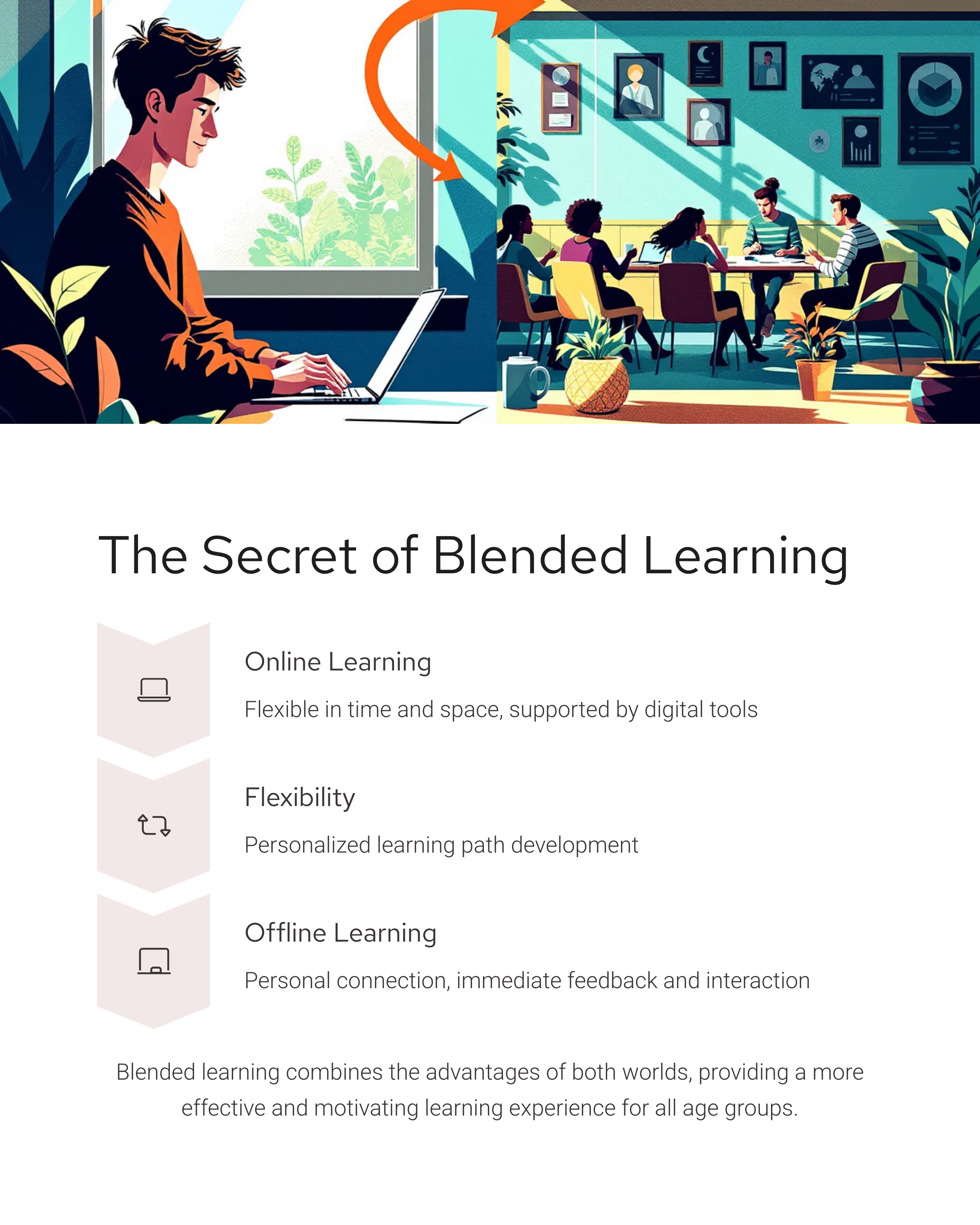
Blended learning – a flexible, modern, and personalised learning model
Adult education in the 21st century is increasingly built around learning formats that adapt to individuals’ life situations, learning styles, and time constraints. One of the most effective responses to this need is blended learning – a model that combines the key benefits of both online and in-person education.
Balanced mix of theory and practice
In the KilátóSáv training programme, 40% of the content is theoretical while 60% focuses on practice-based, experiential learning. This ensures that participants gain real-life applicable knowledge and skills – especially important for supporting reintegration after incarceration or marginalisation.
Combination of in-person and online sessions
The learning process consists of 50% in-person group sessions and 50% online elements. Face-to-face meetings allow for real-time feedback, personal connection, and peer support, while online modules offer flexibility and self-paced learning – ideal for adults juggling multiple life challenges.
Online learning: flexibility in time and space
Online learning enables participants to work through materials at their own pace, on their own schedule, and from any location. The use of digital tools – including learning apps, video content, and interactive exercises – provides a high level of autonomy, particularly useful for those recently released from prison or working adults with limited time.
Flexibility: creating personalised learning paths
Blended learning is not a rigid format, but a framework for tailoring individual learning journeys. Participants can engage based on their unique backgrounds, learning speeds, and competence levels. Some focus on self-reflection, others on building concrete skills – an essential approach for the KilátóSáv programme, where learners often have very diverse educational histories.
Offline learning: connection, feedback, and group experience
Face-to-face workshops, group sessions, and interactive trainings foster emotional safety, self-confidence, and social learning. For people in or recently released from incarceration – or others in vulnerable situations – these supportive human connections are often key to successful reintegration.
Why is blended learning so effective in the KilátóSáv programme?
The KilátóSáv training structure is built on the blended learning model. Digital modules are complemented by experiential learning methods, self-reflective tasks, independent study, and group discussions. This holistic approach not only makes learning more engaging, but also facilitates deep personal transformation, identity rebuilding, and long-term growth.
Blended learning thus becomes a genuine tool for empowerment: learners are not passive recipients, but active agents in shaping their own progress – and this is at the heart of any effective reintegration effort.